A bag of frozen vegetables, raw chicken, and a splash of broth goes into the slow cooker frozen solid at 8 a.m., and by 6 p.m. the recipe promises a complete dinner. That pitch sells thousands of freezer-to-crockpot prep sessions every Sunday. But run that same frozen brick through a real 8-hour low cook and you will often pull out chicken that is dry and stringy while the carrots still have a raw, chalky center.
The freezer changes the rules of slow cooking in two ways most dump meal tutorials never mention: frozen ingredients take hours to thaw inside the cooker, which delays the entire cooking window, and the ice crystals that form during freezing rupture vegetable cell walls, making them release water early and turn mushy long before the meat finishes. That combination is why a meal you assemble with care can still come out wrong. The fix isn’t to abandon freezer prep — it is to understand which foods freeze well, which parts of the recipe should stay fresh, and how to adjust your cooking time and liquid levels for a mass that starts at 0°F instead of 40°F.
Myth: A Frozen Dump Bag Cooks Exactly Like a Fresh One
The most common piece of advice across freezer meal blogs is simple: just add a few extra hours to the cook time. In practice, a frozen 3-pound bag of chicken thighs and vegetables can take 3 to 4 hours just to thaw inside a slow cooker set to low, depending on how dense the block is and how tightly the contents are packed. That means an 8-hour low cook is effectively only 4 to 5 hours of actual cooking at temperature — enough to cook small pieces of chicken but not enough to break down a tough pork shoulder or cook dense root vegetables through.
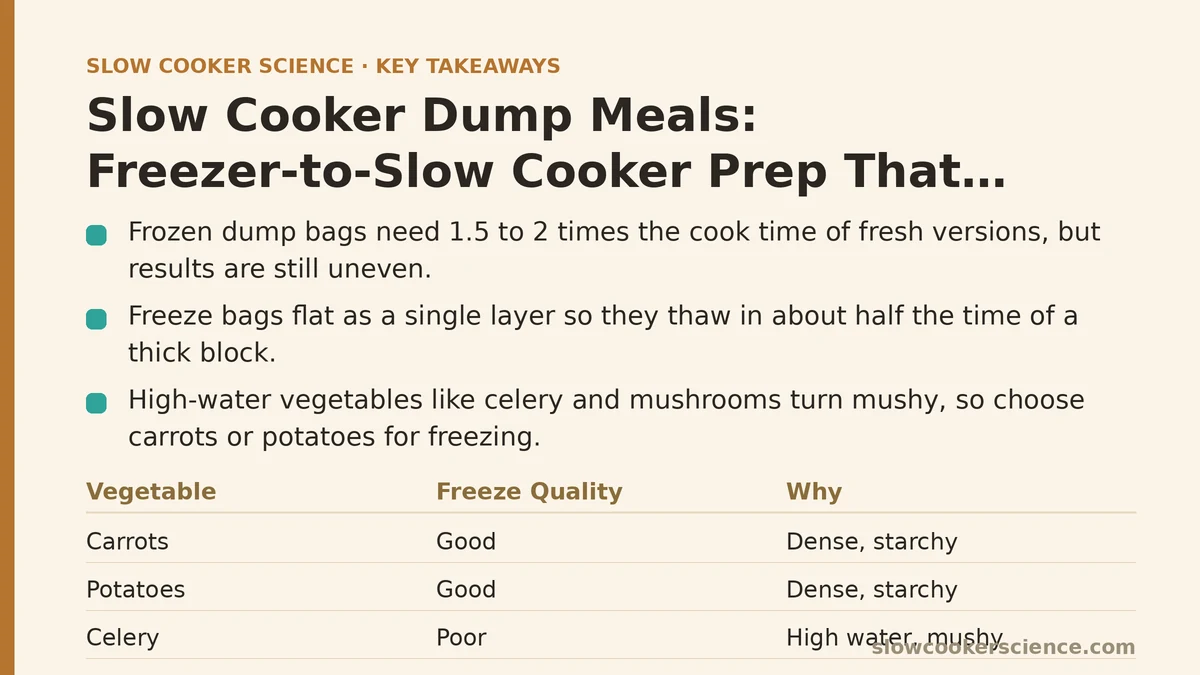
Reality: Frozen dump bags need 1.5 to 2 times the cook time of the fresh version, and even then the results are uneven. The outer edges of the block cook first while the center remains frozen, so you get overcooked exterior meat and undercooked interior vegetables from the same pot.
What to do instead: Thin out the contents before freezing. Spread the raw ingredients in a single flat layer inside the bag, press out as much air as possible, and lay the bag flat in the freezer so it freezes as a sheet rather than a dense brick. A flat bag thaws in the slow cooker in about half the time of a thick rectangular block, and it also lets you break off a portion if you only need half a recipe.
Myth: Vegetables Freeze as Well as Meat in a Dump Bag
Meat freezes and thaws with minimal texture loss because its protein structure holds up well to ice crystal formation, especially if the pieces are small and coated in a little fat or sauce. Vegetables are a different story. High-water vegetables — celery, zucchini, bell peppers, mushrooms, and leafy greens — freeze poorly on their own. The water inside their cells expands into ice crystals that puncture cell walls, and when those cells thaw and cook, they dump their water into the pot and turn to mush.
Reality: A freezer dump bag that includes fresh mushrooms and celery will produce a dish where those vegetables have essentially dissolved into the broth by the time the meat is tender. You lose texture, flavor, and visual appeal in one go.
What to do instead: Choose freezer-stable vegetables for anything that goes in the bag. Carrots, potatoes, sweet potatoes, parsnips, and butternut squash hold their structure through a freeze-thaw cycle reasonably well because they are dense and starchy. Onions freeze acceptably if chopped small, but their texture softens considerably. Green beans and peas freeze well because they are often commercially flash-frozen with their structure intact. Fresh herbs, of course, never go in the bag — add those after cooking.
Sensitive vegetables — zucchini, mushrooms, fresh spinach, cherry tomatoes — should be added fresh on cooking day, even if everything else comes from the freezer bag. This is the single biggest upgrade you can make to a dump meal system.
Myth: Freezer to Slow Cooker Works for Every Recipe Type
Check any recipe collection and you will find frozen dump versions of creamy pastas, rice-based casseroles, and dairy-heavy soups. These are the recipes most likely to disappoint, because dairy and starch behave poorly under extended low heat.
Reality: Milk, cream, and cream cheese curdle or separate when simmered for hours, especially after being frozen first. The freezing process destabilizes the fat emulsion, and the long slow cook finishes the job. Rice and pasta, meanwhile, absorb liquid and turn to a soft, bloated paste if they sit in the cooker for the entire duration — and frozen rice clumps into a solid mass that never separates properly.
What to do instead: Reserve dump bag prep for dishes that survive long moist heat without dairy or quick-cooking starches. Chunky soups, stews, braised meats, and chili all work excellently. For any recipe containing cream, coconut milk, or cheese, freeze everything else in the bag and add the dairy component in the final 30 to 45 minutes of cooking. The same goes for rice or pasta — cook it fresh and serve on the side, or add it to the slow cooker only for the last 20 minutes with a little extra liquid.
Myth: You Can Put a Frozen Bag Straight Into the Cooker Without Thawing
The phrase “dump and go” implies zero planning, and food safety guidelines are the reason that promise is misleading. A slow cooker brings food up through the bacterial growth danger zone (40°F to 140°F) slowly, and a frozen mass of ingredients extends the time it spends in that zone considerably, sometimes by several extra hours.
Reality: Health agencies consistently advise against cooking frozen meat in a slow cooker because the extended time in the danger zone allows bacteria to multiply before the interior reaches a safe temperature. In testing, a large frozen block can sit at under 140°F for 4 to 5 hours, which is far longer than the two-hour guideline for perishable foods.
What to do instead: Plan a partial thaw. The night before you intend to cook, move the freezer bag to the refrigerator. Even 12 hours of refrigeration will thaw the outer layer while the center stays partially frozen, which is ideal for a slow cooker — the food starts cold but not frozen solid, so it passes through the danger zone in a reasonable time frame. If you forget to plan ahead, place the sealed bag in a bowl of cool water for 30 to 60 minutes to take the edge off, then cook. Avoid thawing at room temperature or in hot water, which begins cooking the outer edges of the meat.
Reality: What Works on a Busy Weeknight
A reliable freezer-to-slow-cooker dinner involves three pieces working together: a frozen bag of hardy ingredients, a small number of fresh components added at the right moment, and a liquid adjustment that accounts for what freezing releases.
Here is a pattern that has worked consistently in testing across several slow cooker models:
The base bag (freeze flat, add on cooking day):
- Cubed beef stew meat or boneless chicken thighs
- Chopped onions
- Carrots and potatoes, cut into even chunks
- Dried herbs and spices (these freeze fine, but they mellow during freezing, so go slightly heavier than a fresh recipe)
- A small amount of broth or tomato paste, just enough to coat the ingredients
Fresh additions on cooking day:
- Mushrooms, zucchini, or any high-water vegetable
- Minced garlic or fresh ginger, which lose their punch if frozen
- A bay leaf and a squeeze of citrus or vinegar for brightness at the end
Cooking adjustments:
- If the bag went into the freezer flat and spent the night in the refrigerator, cook on low for the recipe’s stated time plus 30 to 60 minutes.
- If the bag went in frozen solid with no thaw, expect to add 1.5 to 2 hours on low, and check meat for doneness before serving.
- Reduce added liquid by about a quarter, because frozen vegetables release water as they cook. A dish that starts with 2 cups of broth will end up closer to 3 cups by the end.
How to Know If Your Dump Bag Is Working (and When to Abandon It)
You can judge a dump meal’s success before you even taste it. At the halfway point, lift the lid and evaluate the three warning signs:
- Liquid level: If the pot looks soupy halfway through and the meat still isn’t tender, you added too much liquid. Remove the lid for the final hour to let some reduce, or accept a thinner final dish.
- Vegetable texture: Poke a carrot chunk with a fork. If it collapses under light pressure, it will be mush by dinner. This is a sign you used vegetables that shouldn’t have been frozen, or you cooked longer than needed.
- Meat color and feel: Chicken that has turned gray-white and shrunk away from the bone is overcooked. Pull the meat out early and let it rest, even if the vegetables need another 30 minutes.
The clearest signal that a dump meal system is failing: you rely on it every week but consistently doctor the final dish with fresh herbs, extra salt, or a complete sauce to make it edible. Those fixes are fine, but they mean the frozen components are carrying too much of the load. Shift more of the fresh additions to cooking day and you’ll taste the difference in one week.
Compare Your Options Before You Commit
There are three common approaches to freezer-to-slow-cooker prep, and they differ in time investment and result quality:
1. Fully assembled bags. Everything goes in the freezer, nothing is added later. This is the fastest to assemble and the least reliable in the final dish. Best for forgiving recipes like chili or braised beef with root vegetables, where texture variation is less noticeable.
2. Par-prepared bags. You freeze the hardy components (meat, root vegetables, onions, spices, broth) and keep a small list of fresh extras to add on cooking day. This takes about 10 extra minutes on prep day but delivers a measurably better result. This is the approach worth building your routine around.
3. Cook-once, freeze-after. You cook a full batch fresh, freeze the finished meal in portions, then reheat during the week. This is not a dump meal at all, but it often produces the best flavor because the food was cooked properly before freezing. It costs you a few hours on one day, but every dinner after that takes under 10 minutes.
If your dump meals keep coming out mediocre, the problem is rarely your seasoning or your recipe — it is the physics of freezing and slow cooking fighting each other. Thin bags freeze and thaw faster. Hardy vegetables survive, delicate ones don’t. Dairy and rice should never hit the freezer. And a thirty-minute fridge thaw beats six extra hours of low heat every single time.
What is the one dump meal you keep trying to make work? Tell me what is in the bag and what time you set in the morning, and I can help you pinpoint what is throwing the final dish off.
Related guides: Freezer-to-Slow-Cooker Meal Prep: A Beginner’s Step-by-Step Guide, Meal-Prep Breakfast Slow Cooker: Overnight Oats and Egg Bites Step by Step, and Slow Cooker Beginner Guide: Your First Week of Meals, Step by Step.