One of the first questions I get in any beginner’s class is always the same: “Why is my slow cooker sauce so thin and watery?” Students describe following a recipe perfectly, only to end up with a dish swimming in a broth-like liquid rather than the rich, clinging sauce they envisioned.
The cause is simple physics: a slow cooker’s sealed lid traps moisture, preventing the evaporation that naturally thickens sauces in an oven or on a stovetop. But the solution isn’t just a matter of adding a spoonful of flour. The method you choose genuinely affects the final texture, flavor, and appearance of your dish. Here are the four primary methods, ranked from my least to most recommended for achieving consistently great results.
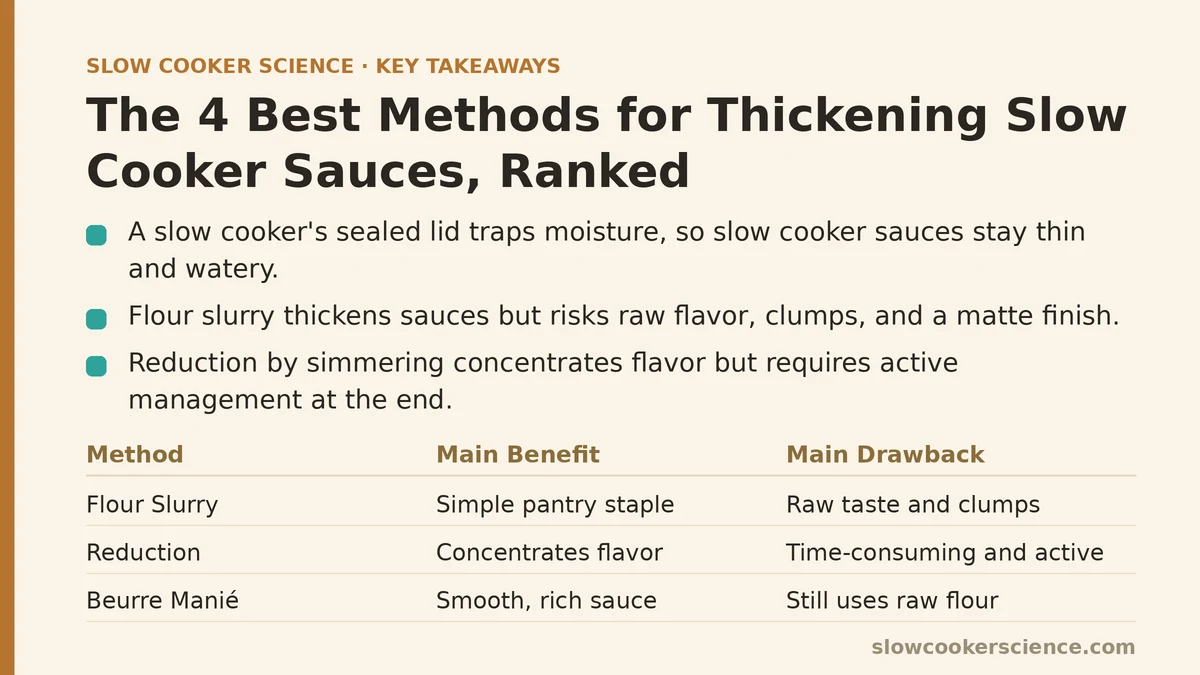
Method #4: The Flour Slurry
This is the classic, old-school method many of us saw our grandparents use. It involves whisking all-purpose flour into a small amount of cold water to form a thin paste, then stirring that paste into the hot liquid in the slow cooker.
Why it works (and its limitations): The starches in the flour absorb liquid and swell when heated, thickening the sauce. However, flour contains proteins and other components alongside the starch, and it requires a full boil to cook out a “raw” or pasty flavor, which a slow cooker on its “high” setting can just barely achieve. It also has a tendency to clump if not whisked perfectly and produces a more opaque, matte-finish sauce compared to its modern counterparts.
My Verdict: This method works in a pinch if it’s the only thing you have in the pantry, but I consider it a last resort. The risk of a raw flour taste and clumpy texture makes it my least favorite option when other, more reliable methods are available.
Method #3: Reduction by Simmering
The purist’s approach involves no added starches. To reduce a sauce, you simply remove the lid of the slow cooker for the last 30-60 minutes of cooking, turn the setting to high, and allow the excess liquid to evaporate. For slow cooker models that don’t get hot enough, you can also pour the liquid into a saucepan and simmer it on the stovetop.
Why it works (and its limitations): This is the most effective way to concentrate flavor. As water evaporates, the flavors of your broth, aromatics, and seasonings become bolder and more intense. It’s a fantastic technique for developing a deep, rich sauce. The primary drawback is that it negates the “set it and forget it” convenience of slow cooking, requiring active management at the end. It is also time-consuming.
Verdict: This method is recommended when flavor concentration is more important than simple thickening. If your dish tastes a bit flat and is also watery, reduction solves both problems. However, for a simple weeknight meal where convenience is key, it’s often more trouble than it’s worth.
Method #2: The Beurre Manié
A classic French technique, a beurre manié (translated as “kneaded butter”) is a paste made from equal parts softened butter and all-purpose flour kneaded together. Small balls of this paste are then whisked into the hot sauce at the end of cooking.
Why it works (and its limitations): This is essentially a much-improved version of the flour slurry. The fat from the butter coats the individual flour granules, preventing them from clumping together when they hit the hot liquid. This results in a much smoother, lump-free sauce. The butter also adds a lovely richness and sheen. The main limitation is that it still uses raw flour, though the risk of a pasty taste is lower, and it obviously adds fat to the final dish.
My Verdict: This is my go-to method for richer dishes like beef stew, pot roast gravy, or creamy chicken recipes where the added fat and richness from the butter is a welcome bonus. It feels more professional and produces a wonderfully silky texture that a simple slurry can’t match.
Method #1: The Cornstarch Slurry
This has become the modern standard for a reason. A cornstarch slurry is made by whisking equal parts cornstarch and cold water until smooth, then stirring it into the sauce during the last 15-30 minutes of cooking on high.
Why it works (and its limitations): Cornstarch is a pure starch, giving it roughly twice the thickening power of flour by weight. It gelatinizes at a higher temperature than flour, creating a translucent, glossy sheen that is often more visually appealing. Its neutral flavor is undetectable in the final dish. Its main downside is that its thickening power can break down if boiled for too long, and using too much can create a slightly gelatinous or unnaturally slick texture.
My Verdict: For the vast majority of home cooking situations, this is the most reliable, effective, and foolproof method. It’s fast, gluten-free, and creates a beautiful, clean-tasting sauce. It’s often the recommended starting method and is widely used for everything from sweet and sour pork to chicken and vegetable dishes. Its consistency and ease of use make it the undisputed winner for everyday slow cooking.
A Quick Reference
| Method | Ease of Use | Final Texture | Flavor Impact |
|---|---|---|---|
| Cornstarch Slurry | Very Easy | Glossy, translucent | None |
| Beurre Manié | Easy | Silky, rich, opaque | Adds richness |
| Reduction | Moderate | Natural | Concentrates flavor |
| Flour Slurry | Difficult | Can be clumpy, matte | Can taste “raw” |
My Final Recommendation for Most Home Cooks
While a professional chef might reach for a beurre manié to finish a luxurious sauce, and a purist might insist on reduction, the cornstarch slurry is the champion for everyday slow cooking. Its reliability, neutral flavor, and powerful thickening ability solve the watery sauce problem with the least amount of fuss.
Understanding all four methods, however, moves you from simply following a recipe to making deliberate choices about the final result you want to achieve. That’s the real goal of understanding the science behind the technique—it empowers you to adapt and perfect any dish.
What kind of sauce are you struggling to thicken? Describe the dish and I can tell you which method I’d choose. Related guides: How to Thicken Sauces in a Slow Cooker: 5 Methods Explained, Slow Cooker Sauce Splitting and Curdling: Fixes for Common Mistakes, and Best Slow Cooker Settings for Chicken Dishes.